
Change your transmission oil – instead of risking transmission damage!
The oil in your automatic transmission ages with every kilometre. The result: juddering, high consumption – and, in the worst case, expensive transmission damage.
The solution is simple: a regular oil change keeps your transmission fit, ensures smooth gear changes, and protects against costly repairs.*
Quick check: when is a transmission oil change due?
Do a quick check
A timely transmission oil service helps to avoid unnecessary repair costs and ensure the long-term reliability of your vehicle. Acting early protects you from expensive consequential damage and ensures that the automatic transmission continues to function reliably even with high mileage.
With our checklist, you can see at a glance whether your vehicle requires attention. Certain changes in driving behaviour or high mileage can be clear signs that an oil change is due. The sooner you take action, the easier it is to avoid major damage and unexpected workshop costs.
If your transmission has already covered several tens of thousands of kilometres and no oil change has been carried out so far, you should have its condition checked at your workshop. A timely check provides clarity, creates peace of mind – and is usually much cheaper than a repair later on.

Why should I change my transmission oil? We explain it in the movie!
PREVENT COSTS. PREVENT COSTS. PREVENT COSTS. PREVENT COSTS. PREVENT COSTS. PREVENT COSTS. PREVENT COSTS. PREVENT COSTS.
PREVENT COSTS. PREVENT COSTS. PREVENT COSTS. PREVENT COSTS. PREVENT COSTS. PREVENT COSTS. PREVENT COSTS. PREVENT COSTS.
A small investment. A large difference.
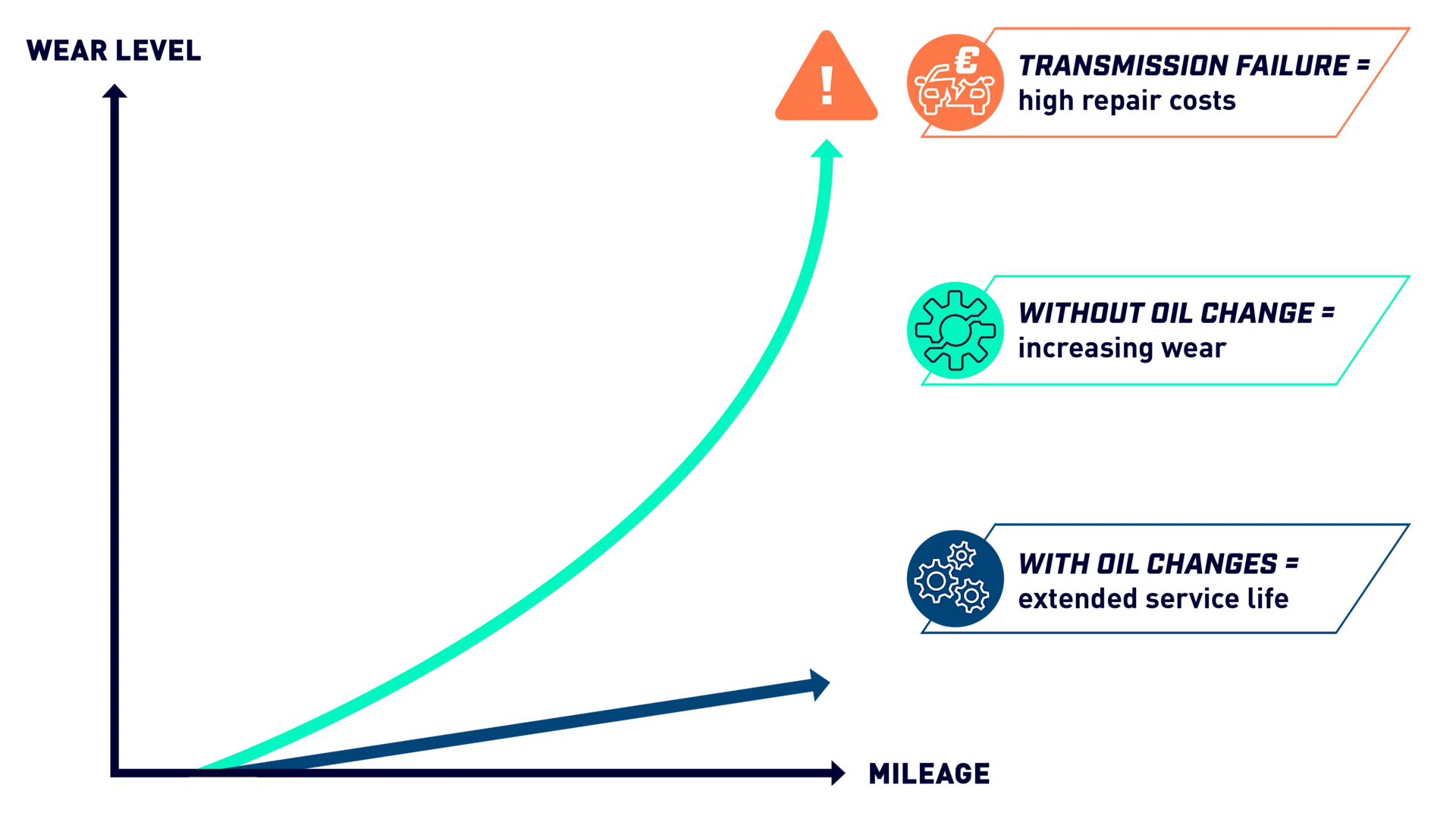
Sensible maintenance instead of a cost trap
A regular oil change for an automatic transmission is one thing above all: an investment that pays off. Because if you carry out maintenance early on, you avoid costly repairs and protect yourself from unpleasant financial surprises. While a planned oil change causes modest and calculable costs, a transmission repair can quickly add up to many times that amount – ranging from the replacement of single components to replacement of the complete transmission.
Especially annoying: Damage to the automatic transmission often develops gradually and only becomes noticeable once expensive consequential damage has already occurred. Those who take preventive measures retain control of their maintenance budget and significantly reduce the risk of unexpected visits to the workshop. In addition, regular maintenance contributes to the value retention of your vehicle. Proof of transmission maintenance has a positive impact on the resale value and creates trust in potential buyers.
The bottom line is: a timely oil change is significantly cheaper than a costly repair – and ensures that you save in the long term instead of paying more later on.
Sensible maintenance instead of a cost trap
A regular oil change for an automatic transmission is one thing above all: an investment that pays off. Because if you carry out maintenance early on, you avoid costly repairs and protect yourself from unpleasant financial surprises. While a planned oil change causes modest and calculable costs, a transmission repair can quickly add up to many times that amount – ranging from the replacement of single components to replacement of the complete transmission.
Especially annoying: Damage to the automatic transmission often develops gradually and only becomes noticeable once expensive consequential damage has already occurred. Those who take preventive measures retain control of their maintenance budget and significantly reduce the risk of unexpected visits to the workshop. In addition, regular maintenance contributes to the value retention of your vehicle. Proof of transmission maintenance has a positive impact on the resale value and creates trust in potential buyers.
The bottom line is: a timely oil change is significantly cheaper than a costly repair – and ensures that you save in the long term instead of paying more later on.
What are the benefits of changing the transmission oil?
A regular oil change keeps your automatic transmission fit, ensures smooth gear changes, and protects against costly repairs. Use the hotspot to discover the kit’s key benefits – click to see all the benefits at a glance.
A regular oil change keeps your automatic transmission fit, ensures smooth gear changes, and protects against costly repairs. Use the hotspot to discover the kit’s key benefits – click to see all the benefits at a glance.
Greater resale value
Longer service life of the vehicle
Smoother, more precise gear changes
Protection from expensive transmission repairs
Advantages
Advantages
An overview of all the benefits
Smoother and more precise gear changes – your transmission shifts smoothly and responds without judders or delays. This makes every journey feel more comfortable and pleasant, whether in town or on the motorway.
Protection against expensive repairs or transmission damage – fresh oil prevents deposits and excessive wear. In the worst-case scenario, this could save you many thousands of euros for a new transmission.
Longer service life for your vehicle – a well-maintained automatic transmission remains reliable for many years. This not only increases your driving enjoyment, but also improves safety on the road.
Consistent driving comfort and reliable performance – the vehicle responds as you expect it to: smooth acceleration, quiet running and a pleasant driving experience at any speed.
Higher resale value – proof of maintenance makes the vehicle more attractive to buyers. With a regular oil change, you ensure better chances of a sale and a higher price.
It all comes down to the right oil
Perfectly tailored to each automatic transmission
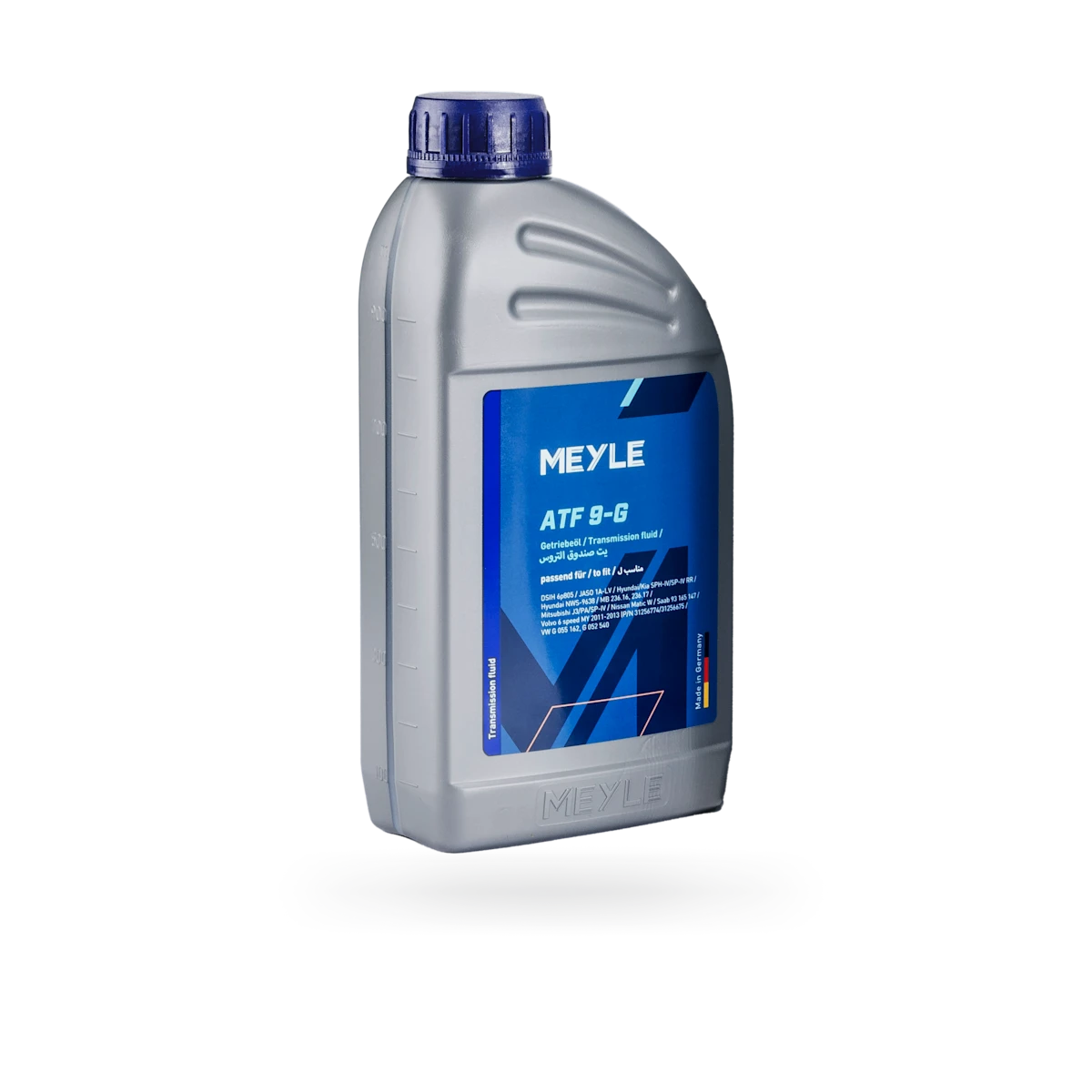
For an automatic transmission to work reliably, the right oil is crucial. That is why MEYLE always supplies the correct transmission oil according to the manufacturer’s specifications. This ensures that viscosity, additives and approvals are optimally matched to the specific transmission.
Oil change for automatic transmissions: every question and every answer
Would you like more information on changing the oil in an automatic transmission?
An automatic transmission operates with many precision components that must be optimally lubricated and protected. Transmission oil ages with time, loses its protective effect, and this can cause wear and tear. A regular oil change helps to prevent damage, maintain smooth gear changes and extend the vehicle’s service life.
You can find all the information on automatic transmission oil changes in our FAQ.
Why automatic transmission oil changes are important
Regular oil changes ensure that automatic transmissions work cleanly and reliably with low wear. Ageing oil can lose its protective effect and lead to poorer shifting performance or long-term damage.
Why does automatic transmission oil have to be replaced?
As it ages, the oil loses viscosity and additives degrade. This means it can no longer reliably protect the components in the transmission. Regularly changing the oil improves shifting performance, reduces wear, prevents faults and extends transmission life.
What happens if the oil is not replaced?
Neglecting to change the oil can lead to juddery or delayed shifting. Deposits and metal debris increase wear and can cause costly damage and even complete transmission failure. Punctual oil changes prevent such problems.
Do hybrid and electric vehicles also need oil changes?
Yes. Hybrid and electric vehicles also need fresh oil – although often not for a classic automatic transmission, but for the so-called drive unit. This contains the motor, electronics and a single-speed gearbox, which also needs to be protected by means of periodic oil changes.
How often should the oil be replaced?
Replacement is recommended every 60,000–120,000 km or every three years. The oil ages faster when drivers take frequent short journeys, have a sporty driving style or use trailers. Specialist workshops can assess when a change is necessary based on service and vehicle data.
How do you recognise that an oil change is needed?
Typical signs are juddery shifting, delayed gear-changing or unfamiliar behaviour while accelerating. Workshops can also determine the condition of drained oil from its odour, colour and degree of contamination.
How long does an oil change take?
A professional automatic transmission oil change takes between 2 and 4 hours depending on the vehicle type. This involves replacing the oil, filters, seals and any magnets and refilling the transmission with exactly the prescribed volume.
Can I check the replacement intervals in the on-board computer?
In most modern vehicles, there is no direct display in the on-board computer which explicitly alerts: “Automatic transmission oil change due”. With modern vehicles, however, many workshops can consult their filed scopes of service to ascertain the need for an automatic transmission oil change. In any case, motorists should keep an eye on mileage and explicitly ask their workshop about the oil change in order to avoid any resulting damage.
Why should I as a driver get an oil change done?
An oil change protects the transmission from long-term wear and prevents expensive repairs. If vehicles are to run smoothly and reliably in the long run, they require regular care – this includes fresh automatic transmission oil.
Can I replace the oil myself?
An automatic transmission oil change is strictly a job for experts. Modern transmissions require special tools, exact oil temperatures, specified fill volumes and sometimes software adjustments. DIY changes can lead to considerable damage.
Does the transmission have to be retrained after the change?
In many cases, no coding is necessary. In modern transmissions, however, it can make sense to reset the adaptation values so that the transmission optimally adapts to the fresh oil. The specialist workshop performs this task.
What is the difference between transmission oil changes and transmission flushing?
Transmission oil changes are the normal and recommended maintenance procedure for an automatic transmission and include draining the old oil, replacing the filter and other components (magnets, seals, etc.) and refilling with fresh oil.
Transmission flushing, by contrast, involves completely removing the entire contaminated oil volume and flushing the system with additional new oil, which clears the transmission of virtually all foreign matter and wear particles.
*A regular automatic transmission oil change significantly helps to reduce wear and minimise the risk of transmission damage. Nevertheless, transmission damage caused by other factors – such as driving style, operating conditions, pre-existing wear or technical defects – cannot be completely ruled out. An oil change is therefore a preventive maintenance measure, but it does not guarantee that transmission damage will be avoided.
An automatic transmission oil change should always be carried out by qualified professionals. Modern transmissions require special tools, precise oil temperatures, specified filling quantities and, in some cases, software adaptations.